By the STBL Team · · Updated
Tokenized Silver Explained: Owning Physical Silver on the Blockchain
Silver is bulky and costly to store. Tokenized silver puts ownership of vaulted, physical silver on the blockchain. Here is how it works and how it compares to gold.
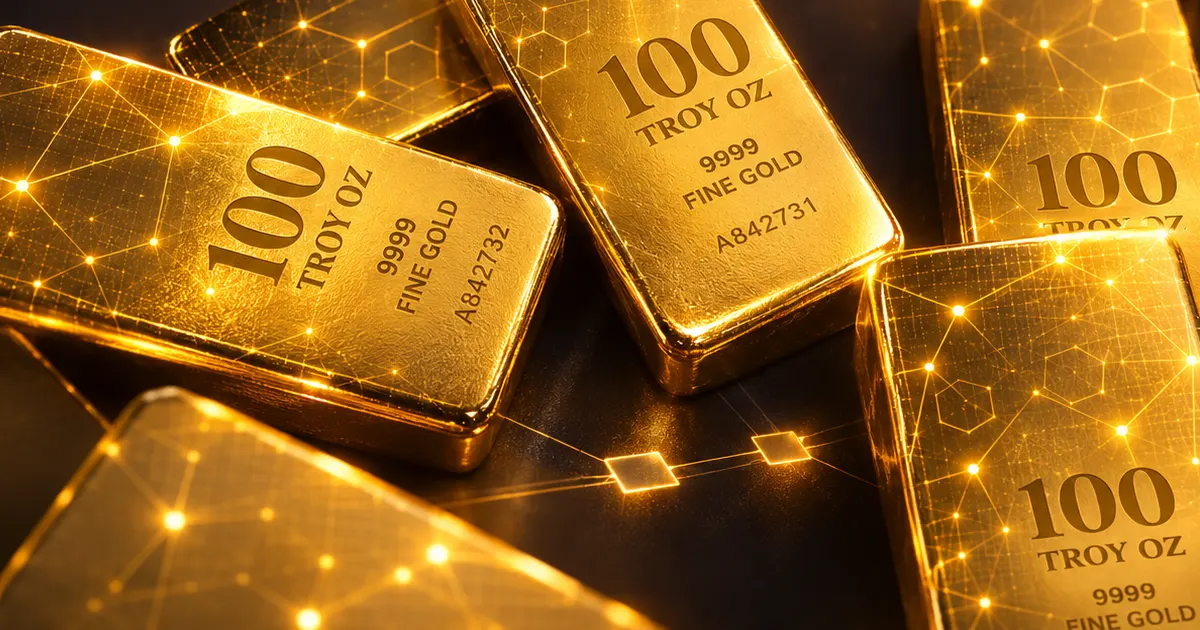
Tokenized silver is a blockchain token that represents ownership of physical silver held in a vault. It lets you own real metal without storing heavy bars or coins yourself. With STBL Silver, each token represents one troy ounce of physical, allocated silver kept in insured U.S. vaults, and it can be transferred, converted, or redeemed for delivery.
Key Takeaways
- •Tokenized silver is a silver-backed token on a blockchain, with each token tied to a set amount of physical metal in storage.
- •STBL Silver represents 1 troy ounce (31.1035 grams) of physical, allocated silver per token.
- •Tokenization is designed to solve silver's biggest practical problems: bulk, storage, and the friction of buying and selling.
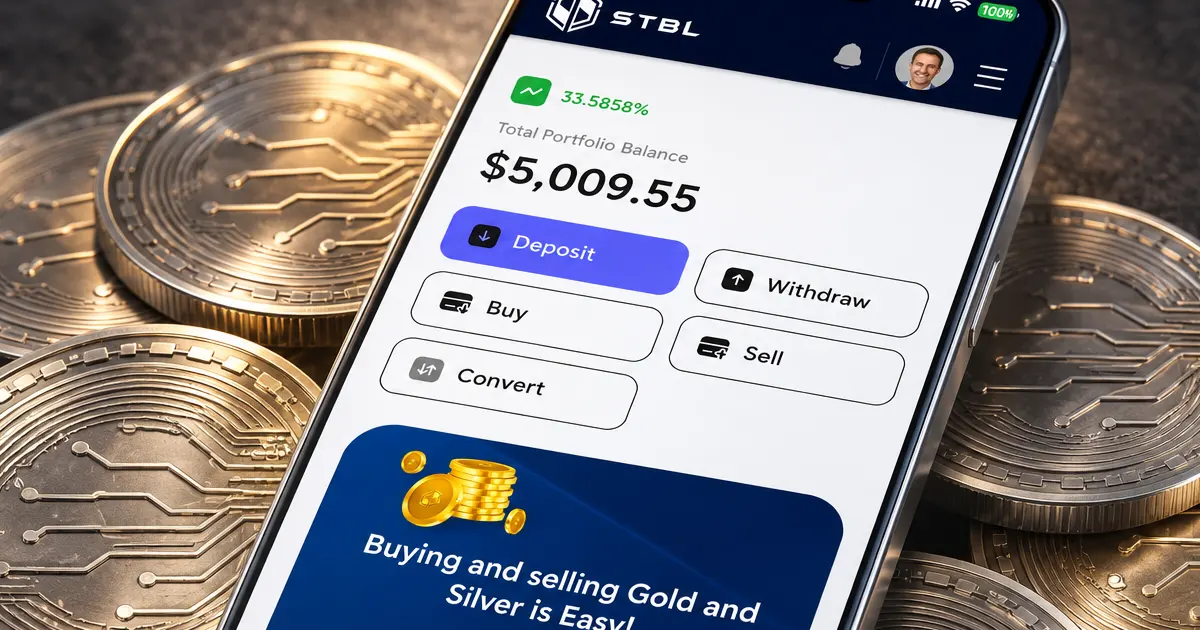
- •On STBL, you can buy with fiat or crypto. You can also convert between silver- and gold-backed tokens through your account.
- •Physical redemption is available from 1 oz, subject to compliance checks and your jurisdiction.
What is tokenized silver?
Tokenized silver is silver whose ownership is recorded as a digital token on a blockchain. The token is the record of ownership; the value comes from the physical silver held in reserve.
You may also see the terms silver-backed token or digital silver. A credible silver-backed token should always point to identifiable physical metal, with a clear ratio such as one token per troy ounce, and independent verification that the reserves exist.
If you already understand gold-backed tokens, the mechanics are the same. Our pillar guide, What Is Tokenized Gold?, covers minting, custody, and redemption in depth.
Why is physical silver hard to own?
Silver has a long history as money and as a store of value, but owning it physically comes with practical problems that gold buyers face less often.
Silver is bulky
Silver is worth far less per ounce than gold, so the same dollar amount of silver takes up much more space and weighs much more. A meaningful silver position can quickly become a heavy box rather than a few coins. That makes it harder to store, move, and insure.
Storage is a real cost
Keeping silver at home creates theft and insurance concerns. Storing it professionally usually means paying a dealer or depository a recurring fee, and because silver is bulky, storage costs can be large relative to the value of the metal.
Premiums and spreads add up
Buying small silver coins and bars often comes with a premium, the amount paid above the underlying metal value to cover minting, distribution, and dealer margins. Selling usually happens at a lower price than buying, known as the spread. On smaller purchases, these costs can eat into the value you receive.
Selling takes effort
Turning physical silver back into cash usually means finding a dealer, shipping or carrying the metal, and waiting for an assay or payment. It is not something you can do quickly at any hour.
How does tokenized silver solve these problems?
Tokenization moves the ownership record onto a blockchain while the metal stays in professional storage. The bulk stays in the vault; you hold the token.
The metal stays in insured vault storage
STBL Silver is backed by physical, allocated silver stored in insured class 3 vaults in the U.S.A., insured by a policy from Lloyd's of London. Allocated means specific metal is set aside for holders rather than pooled as a general claim. Vault locations in other countries are listed as coming soon.
Storage is free for holders
STBL does not charge holders for storage. For silver in particular, where storage can be expensive relative to value, removing that recurring cost is one of the biggest practical differences from traditional silver storage programs.
Ownership is transferable 24/7
STBL tokens can be transferred 24/7 between whitelisted wallets or exchange partners, with no lock-in period. That means you are not tied to dealer hours or shipping times to move your position.
Backing is verifiable
STBL is deployed on the Polygon blockchain, which tracks issuance and redemption. On-chain records link to the physical metal, and STBL provides third-party audits, audited public reports, and proof-of-reserve visibility. Metals are sourced from reputable accredited suppliers meeting LBMA purity standards and are audited and verified before storage. Our guide on verifying gold-backed tokens with proof of reserves explains how to check this kind of evidence, and the same approach applies to silver.
You can still take delivery
A token that can never become metal is just a price tracker. STBL supports physical redemption starting from 1 oz, delivered by insured courier with signature required through a white-glove vault-to-door service. Same-day shipping is available. Redemption is subject to compliance checks and depends on your jurisdiction.
Gold vs. silver: what role does each metal play?
Gold and silver are often grouped together, but they behave differently and people hold them for different reasons.
Gold is widely viewed as a store of value. It is dense, so a lot of value fits in a small space, and it is held in large amounts by central banks and institutions. Many people treat gold as a long-term anchor in a portfolio.
Silver is both a precious metal and an industrial metal. A large share of demand comes from manufacturing uses such as electronics and solar panels, alongside coins, bars, and jewelry. Because of this mix, silver prices have historically tended to be more volatile than gold prices.
Some holders choose one metal; others hold both. A common way people compare the two is the gold-to-silver ratio, which is how many ounces of silver it takes to buy one ounce of gold. Some people watch this ratio when deciding how to divide between the metals, though it is not a reliable predictor of future prices.
Learn more about each product on the STBL Gold and STBL Silver pages.
How does gold-to-silver conversion work on STBL?
STBL supports converting between gold-backed and silver-backed tokens through your account. The process takes a few steps today, and a simpler experience is coming in the months ahead. Conversion lets you rebalance between the two metals within one account, without selling to cash, shipping metal, or opening a separate account.
Because both tokens are backed one-to-one by troy ounces, a metal-to-metal conversion changes which metal backs your position rather than taking you out of physical metal. Both metals carry price risk, so rebalancing is a decision about exposure, not a way to lock in gains.
How do you buy silver with crypto?
STBL accepts several funding methods, which makes it straightforward to buy silver with crypto or with traditional money:
- Open an STBL account and complete identity verification (KYC/AML).
- Fund your account with fiat, BTC, ETH, USDT, or other supported stablecoins.
- Buy STBL Silver through the platform, or use OTC for larger orders.
- Hold, transfer, or redeem for physical delivery as your needs change.
The steps for funding with digital assets are covered in more detail in how to buy tokenized gold with crypto; the process for silver is the same. New accounts may also be eligible for the introductory silver offer on the start page.
What are the risks of tokenized silver?
Tokenized silver reduces some practical burdens of owning silver, but it does not remove risk.
- •Price volatility: Silver prices can move sharply in both directions, and historically more than gold.
- •Issuer and custody risk: You rely on the issuer to hold the metal, maintain insurance, and honor redemptions.
- •Technology risk: Wallets, smart contracts, and blockchains can fail, and lost wallet access can be difficult to recover.
- •Liquidity risk: Selling quickly depends on available platforms, exchange partners, and buyers.
- •Jurisdictional limits: Access, conversion, and redemption may be restricted depending on where you live.
Understanding these risks is part of choosing whether tokenized silver fits your goals at all.
Frequently Asked Questions
What is tokenized silver?
Tokenized silver is a digital token on a blockchain that represents ownership of physical silver held in a vault. With STBL Silver, each token represents one troy ounce of physical, allocated silver stored in insured U.S. vaults.
Is tokenized silver backed by real silver?
A credible silver-backed token should be backed by identifiable physical metal with independent verification. STBL Silver is backed by allocated silver that is audited and verified before storage, with third-party audits, audited public reports, and proof-of-reserve visibility.
How much does it cost to store silver with STBL?
Storage is free of cost for STBL holders. This is a notable difference from many traditional silver storage options, where recurring fees can be significant because silver is bulky relative to its value.
Can I convert STBL Silver to STBL Gold?
Yes. STBL supports converting between silver-backed and gold-backed tokens through your account. It takes a few steps today, and STBL is working on a simpler conversion experience. Both metals carry price risk.
Can I take physical delivery of my silver?
Yes. STBL supports physical redemption starting from 1 oz, delivered by insured courier with signature required. Redemption is subject to compliance checks and availability in your jurisdiction.
Can I buy less than one ounce of tokenized silver on STBL?
Not yet. Each STBL Silver token represents one troy ounce, and fractional ownership is planned for the future.
This article is for educational purposes only and is not financial, investment, tax, or legal advice. Precious metals and digital assets carry risk, including loss of value.
Ready to Get Started with STBL?
Own tokenized gold and silver backed 1:1 by allocated, insured physical metal.