

By the STBL Team · · Updated
What Is Tokenized Gold? How Gold-Backed Tokens Work (2026 Guide)
Tokenized gold is a blockchain token backed by physical gold held in a vault. Here is how gold-backed tokens are minted, stored, verified, and redeemed.
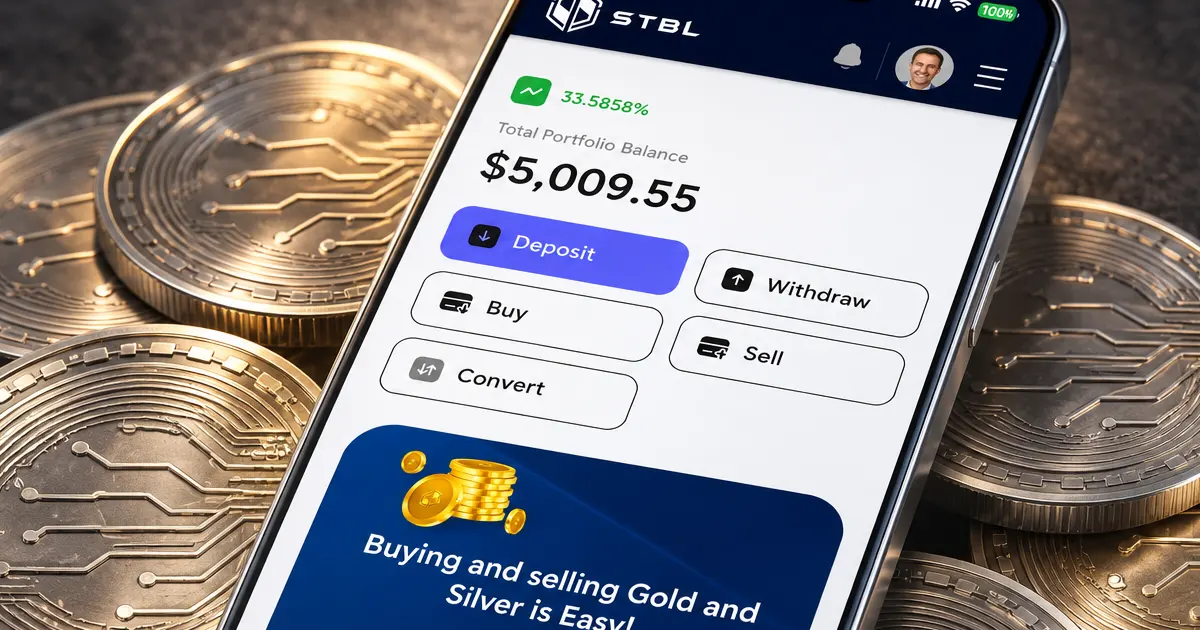
Tokenized gold is a digital token on a blockchain that represents ownership of real, physical gold stored in a vault. Each token is backed by a specific quantity of metal, so holding the token means holding a claim on that gold. With STBL Gold, one token represents one troy ounce of allocated, LBMA-accredited gold stored in insured U.S. vaults.
Key Takeaways
- •Tokenized gold is a blockchain token backed by physical gold, combining the long history of bullion with the transferability of digital assets.
- •With STBL Gold, 1 token = 1 troy ounce (31.1035 grams) of physical, allocated, LBMA-accredited gold.
- •The blockchain records issuance, transfers, and redemption, while the physical metal sits in insured, audited vault storage.
- •Holders can move tokens 24/7 or redeem for physical delivery starting at 1 oz, subject to compliance checks.
- •Tokenized gold still carries risk: gold prices move, and you rely on the issuer's custody, audits, and legal structure.
What is tokenized gold?
Tokenized gold is gold whose ownership is recorded as a token on a blockchain. The token itself is a digital record; its value comes from the physical metal held in reserve by the issuer or its custodian.
You may also see the terms gold-backed token and digital gold. They usually describe the same idea, though "digital gold" is sometimes used loosely for things that are not backed by metal at all, including some cryptocurrencies. A true gold-backed token should always point to identifiable physical gold.
How does tokenized gold work?
Most gold-backed tokens follow the same lifecycle: the metal is sourced and verified, tokens are minted against it, tokens circulate on a blockchain, and tokens can be redeemed and retired when someone takes physical delivery.
Sourcing and verification
The process starts with real bullion. STBL sources metal from reputable accredited suppliers that meet LBMA purity standards, and the metal is audited and verified before it goes into storage.
The LBMA (London Bullion Market Association) sets widely recognized purity and quality standards for gold and silver bars traded in the wholesale market.
Minting tokens against metal
Once gold is verified and stored, tokens are issued, or "minted," to match it. In STBL's model, each STBL Gold token corresponds to one troy ounce of gold. The goal is a one-to-one relationship between tokens in circulation and ounces in the vault.
STBL Gold is deployed on the Polygon blockchain, which tracks issuance and redemption. On-chain records are linked to the physical metal so that the token supply can be compared against the reserves.
Custody and storage
Custody means who physically holds and safeguards the asset. For tokenized gold, the custody arrangement matters as much as the technology.
STBL stores metal in insured class 3 vaults in the U.S.A., insured by a policy from Lloyd's of London. Vault locations in other countries are listed as coming soon. Storage is free of cost for STBL holders, which is different from many traditional bullion storage programs that charge an annual fee.
Redemption for physical gold
Redemption is the process of exchanging tokens for the physical metal they represent. When tokens are redeemed, they are removed from circulation so the supply stays matched to the reserves.
STBL supports physical redemption starting from 1 oz. Deliveries are made by insured courier with signature required, using a white-glove vault-to-door service, and same-day shipping is available. Redemption is subject to compliance checks and depends on your jurisdiction.
For a step-by-step walkthrough of the full process, see how STBL works.
What is allocated gold, and why does it matter?
Allocated gold is gold held in storage where specific bars or coins belong to specific owners and are kept separate from the custodian's own assets. Unallocated gold is a general claim on a pool of metal; you are owed a quantity of gold, but no particular bars are set aside for you.
The difference matters most in a stress scenario. With allocated storage, the metal is designed to be identifiable and held for the owners. With unallocated storage, you are closer to being a creditor of the custodian.
STBL Gold is backed by physical, allocated gold. When you compare providers, this is one of the first questions to ask.
What are the benefits of tokenized gold?
Tokenized gold is designed to keep what people value about bullion while removing some of the friction of owning it directly.
- •Transferability: STBL tokens can be transferred 24/7 between whitelisted wallets or exchange partners, without waiting for market hours.
- •No storage hassle: You do not need a home safe or a separate storage contract. STBL storage is free of cost for holders.
- •Transparency: Blockchain records, third-party audits, audited public reports, and proof-of-reserve visibility let you check that tokens are backed.
- •Flexible ways to buy: STBL accepts fiat, BTC, ETH, USDT, and other stablecoins, through the platform or over the counter (OTC).
- •Conversion options: STBL supports converting between gold- and silver-backed tokens and to other assets, with a simpler conversion experience coming in the months ahead.
- •A path to physical metal: Redemption from 1 oz means the token is not just a price tracker; it can become a bar or coin in your hands.
- •No lock-in: You are not required to hold for a fixed period.
What are the risks of tokenized gold?
Tokenized gold carries real risks, and anyone considering it should understand the tradeoffs.
- •Price risk: The token tracks gold, and gold prices can fall as well as rise.
- •Issuer and custody risk: You depend on the issuer to hold the metal it says it holds, maintain insurance, and honor redemptions.
- •Technology risk: Smart contracts, wallets, and blockchains can have bugs or outages, and lost wallet access can be hard to recover.
- •Liquidity risk: The ability to sell quickly depends on available buyers, platforms, and exchange listings.
- •Regulatory and jurisdictional risk: Rules for digital assets and precious metals vary by country and can change. Redemption and access may be limited in some places.
Physical bullion and funds carry their own risks too. Our comparison of tokenized gold vs. gold ETFs vs. physical bullion walks through those tradeoffs in detail.
How do you evaluate a tokenized gold provider?
Not every gold token is built the same way. Before buying, work through these questions:
- What exactly backs each token? Look for a clear ratio, such as one token per troy ounce, and confirm the gold is physical and allocated.
- What standard does the metal meet? LBMA-accredited or LBMA-standard metal is a strong baseline.
- Where is the metal stored, and is it insured? Ask about the vault class, the jurisdiction, and who provides the insurance.
- Is there independent verification? Third-party audits, public reports, and proof-of-reserve data should be available, not just promised.
- Can you redeem for physical metal? Check the minimum redemption size, delivery method, and any jurisdiction limits.
- What does it cost to hold? Some providers charge storage or custody fees over time.
- How liquid is the token? Find out where and how it can be transferred, sold, or converted.
Our guide on how to verify gold-backed tokens with proof of reserves explains how to check these claims yourself.
Where does STBL Gold fit?
STBL Gold is a gold-backed token issued by STBL LLC. Each token represents one troy ounce of physical, allocated, LBMA-accredited gold stored in insured class 3 vaults in the U.S.A., covered by a Lloyd's of London policy.
The token is deployed on Polygon, which tracks issuance and redemption. STBL supports third-party audits, audited public reports, and proof-of-reserve visibility. STBL Gold has been listed on the Coinstore exchange since July 2025, and tokens can be transferred 24/7 between whitelisted wallets or exchange partners.
Holders can buy with fiat or crypto, redeem for physical delivery from 1 oz, and hold without paying storage fees. Fractional ownership is not yet available and is planned for the future. Qualified holders may be eligible for staking programs through institutional partners, subject to terms and eligibility; any such program should be evaluated on its own merits.
You can learn more on the STBL Gold page, or read about the metal's sibling product in tokenized silver explained.
How do you get started with tokenized gold?
Getting started with STBL takes a few steps:
- Open an STBL account and complete identity verification (KYC/AML).
- Fund your account with fiat or supported crypto such as BTC, ETH, or USDT.
- Buy STBL Gold through the platform, or use OTC for larger orders.
- Hold, transfer, or redeem your tokens as your needs change.
If you plan to fund with digital assets, our guide on how to buy tokenized gold with crypto covers the process in more detail.
Frequently Asked Questions
Is tokenized gold real gold?
A properly structured gold-backed token represents real, physical gold held in a vault. With STBL Gold, each token represents one troy ounce of allocated, LBMA-accredited gold stored in insured U.S. vaults. The token is the ownership record, and the metal is the underlying asset.
What is the difference between tokenized gold and a gold ETF?
A gold ETF is a fund whose shares trade on a stock exchange during market hours, and investors usually cannot take delivery of metal. Tokenized gold is recorded on a blockchain, can be transferred 24/7, and, with providers like STBL, can be redeemed for physical gold. Each structure has different costs, access rules, and risks.
Can I redeem STBL Gold for physical gold?
Yes. STBL supports physical redemption starting from 1 oz, delivered by insured courier with signature required. Redemption is subject to compliance checks and availability in your jurisdiction.
How do I know the gold backing the tokens exists?
Look for independent evidence rather than marketing claims. STBL links on-chain records to physical metal and provides third-party audits, audited public reports, and proof-of-reserve visibility so holders can check that tokens are backed.
Does it cost anything to store tokenized gold with STBL?
No. Storage is free of cost for STBL holders. The metal is held in insured class 3 vaults in the U.S.A. under a Lloyd's of London policy.
Can I buy a fraction of an ounce of STBL Gold?
Not yet. Each STBL Gold token represents one troy ounce, and fractional ownership is planned for the future.
This article is for educational purposes only and is not financial, investment, tax, or legal advice. Precious metals and digital assets carry risk, including loss of value.
Ready to Get Started with STBL?
Own tokenized gold and silver backed 1:1 by allocated, insured physical metal.